recent posts

Tuesday, December 20, 2016

What to consider when buying A laptop

What to consider when buying A laptop

When pricing a laptop, set aside cash for important extras. These include a laptop bag, an extra battery, a mouse, keyboard, software for office work, internet security and system maintenance. You may even want to consider an external hard drive for backup.


We can't in all fairness list only a few laptops makers and tell you to avoid all others. But I will say this: laptops are complex and expensive machines. Things go wrong all the time, and you want to know that if your laptop breaks you will be able to take it back to the manufacturer and get it fixed. So I would always err toward a manufacturer with history and a good reputation. There are great deals to be had online, but there's nothing wrong with a physical store into which you can walk with your laptop if you need help.


Battery Life Manufacturers' battery-life claims range from just a few hours up to 12 hours or more. Laptop enhancements — such as increased processing power, larger and higher resolution screens, faster hard drives, or the addition of an optical drive — will drain your battery more quickly.


The final aspect to consider is the screen coating. While glossy screens are getting better at minimising reflections, if you're mostly working outdoors, you'll want a matte screen to minimise distraction. While some consumer laptops have matte screens, and you can opt for them on others like the MacBook Pro 15, ultimately, you may be resigned to looking at business laptops if you want something that's not shiny.

My first impression after unboxing the Q702 is that it is a nice looking unit. Styling is somewhat minimalist but very effective. The tablet part, once detached, has a nice weight, and no buttons or switches are located in awkward or intrusive positions.

Thanks to Windows 8, you'll also have to consider whether you want a laptop with a touchscreen. We can say unequivocally that if you're buying a Windows 8 laptop, get a touchscreen, as it's almost useless without it unless you intend to bypass all the new stuff altogether. If you're getting a Windows 7 laptop, you don't need one at all.

There's also the question of how many cores you should get. Entry level these days is dual core, which will suit most people just fine. There are also triple-core and quad-core processors out there, but keep in mind that not all applications take advantage of this extra power. Some video-encoding applications, 3D applications and games will use them, though, so if you're a content-production maniac or a gamer, it'll likely be worth investing in a quad-core machine. If you mainly just browse the internet, then dual core is perfectly fine.

Having enough memory is vital to system performance, and lots of RAM lets you run more applications simultaneously. Sufficient RAM is also necessary for image and video editing, and crucial for 3D gaming. This is especially true in laptops, because integrated laptop graphics processors can have little or no memory of their own and share the main system's RAM.

Keep an eye out, though — some are dual core, some are quad core and some have low-voltage chips (meaning lower performance, but also much longer battery life). These days, low-voltage chips are generally found in ultraportable laptops — what Intel calls ultrabooks.

If you are buying used from an online auction site like eBay, read everything. See what is wrong with it. Review the person's feedback. If it isn't brand new, only buy it for a very good price, and make sure you do a clean install. You do not know what the previous owner may have on there and you are taking a risk buying a used laptop sight unseen. Make sure you can return it if something happens. Most of the time the better deals are online. Factory refurbished laptops direct from the manufacturers' websites are also generally inexpensive and come with warran see ties, but again your mileage may vary. Make sure you are comfortable with a laptop before you buy it. In most shops, if you bought a laptop and already used it, you won't get a refund or an exchange. If you do choose to buy online, you may have to pay shipping charges.

Whether you're installing software, backing up files, or removing viruses, Geek Squad can provide helpful service and advice. Consult one of our experts by calling, chatting online, or visiting your nearest Best Buy store. Learn more about Geek Squad Computer and Repair Services


Although it can afford significantly more detail, the consequence of fitting more pixels into the same area is that everything will look significantly smaller and text will become impossible to read — and so images need to be scaled up and replaced with high resolution versions to accommodate. The issue with this? Older programs that haven't been updated with high-resolution imagery will still be scaled up, but will end up looking blurry as a result. This, unfortunately, includes the majority of web page imagery — and although text generally looks amazing, as it's being rendered from a vector (infinitely scalable) source, images will likely look a little fuzzy.

You should be able to order it online and have it shipped to you. The HP website doesn't seem to offer international shipping, but if you search around online, you can probably find a retailer who will ship it (maybe on eBay - just make sure to buy only from a high-rated seller). Or just travel to a place that sells them and bring it back. Flag as duplicate Thanks! Yes No Not Helpful 0 Helpful 0


One option is to supplement your laptop’s small screen with one or more larger monitors on your desk. This way, you’ll get the advantage of portability and maximize your workspace at home. The most important aspect to consider along with screen size is weight, which will increase significantly with screen size.

When it comes to processors, a general rule of thumb is to buy the fastest that you can afford. Problem is, it's not all just about speed these days. A GHz from one family of CPUs doesn't equal a GHz from another. We

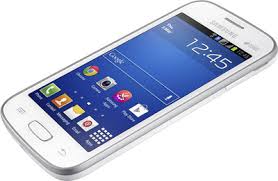
What to consider when buying an Android phone

What to consider when buying an Android phone


Other discount providers charge even less. Virgin Mobile, for example, starts at just $30 per month for unlimited data, though just 500MB of that is high speed. The carrier rides on Sprint's nationwide network, as does Boost Mobile.


As far as camera features, look for optical image stabilization to reduce blur and improve low-light performance. The iPhone 6s Plus has it, but not the regular iPhone 6s. The Galaxy S7 and S7 Edge both have it. The HTC 10 is the first smartphone to offer optical image stabilization on the front camera, which results in better-looking selfies.


If all looks good up to this point, remove the back if it has a removable back. Check the battery and other components. Also make note of whether or not the battery is original or a 3rd party battery. This can make a very real difference on the negotiation price. Be sure to open all slots for microSD and SIM, check for visible damage signs. Speaking of checking for damage, don’t forget about water damage!

By submitting your details, you'll also receive emails from Time Inc. UK, publisher of Trusted Reviews and other iconic brands about its goods and services, and those of its carefully selected third parties. Please tick here if you'd prefer not to hear about: Time Inc.'s goods & services, including all the latest news, great deals and offers Third party goods & services

Since it's hard to judge the build quality from a bunch of specs on a web site, this will probably be one of the last things you've looked at, after you've narrowed everything else down. Before you head to the store to check it out, look up some reviews online. You'll probably hear pretty quickly about device quirks—like battery covers that fall right off—and you'll want to stray away from them (or at least factor them into your decisions).


Start by deciding the minimum specs you are looking for, the minimum Android OS you’re willing to live with, what sizes you are looking for, and the maximum budget you have to spend. This should give you an idea of what to look for and should help you narrow it down to just a small handful of handsets. You may find that your specs goals are too lofty considering your budget, and so adjust if necessary.

Battery LifeMany factors — including the screen size, processor and operating system — determine how long a smartphone lasts on a charge. However, shoppers looking for the longest endurance possible should check out our list of battery life champs. We consider any phone that lasts longer than 8 hours of straight 4G LTE surfing to be acceptable, but greater than 9 hours is better.

For those of us that are bargain shopping for our next Android purchase, some of the usual routes include buying mid-range devices that still offer a fair punch, keeping an eye out for sales, finding a deal on manufacturer refurbished device, or buying “new in box” versions of last-gen flagship devices. One other way to score a good deal is to consider going the “used” route.

More and more phones are offering super-sized screens -- 4-inches to 4.3-inches diagonally, or even bigger -- which are certainly easy on the eyes. But a bigger screen may mean a bigger phone, and a bigger phone may be hard to slip into a pocket. A bigger phone also can be uncomfortable to hold next to your ear during lengthy phone calls.

The latest version is Android 6.0.1 Marshmallow, which is making its way onto existing smartphones. However, many current handsets still run Android 5.1 Lollipop or even 4.4 KitKat. Google has also just announced Android N, but that won't be coming until later on in the year.

For example, using *#*#4636#*#* on my Nexus 5 brings up a menu that lets me look at detailed Phone Info, Battery Info and more. There’s also tests for checking sensors and more.

100% Privacy, No Spam Policy: We value privacy and your email address will be 100% secure. We hate spam just like you do and will never send you too much email, nor will we ever share your information with anyone.

If you insist on a phone with a small screen (under 4.5 inches), look at the iPhone SE or Sony Xperia X Compact. Otherwise, get used to anything from 4.7 to 6 inches (or even larger).

Apple may have made tablets mainstream again, but the iPad has little variety to speak of. Either you get the 10-inch iPad Air or the 8-inch iPad Mini, and the only difference between the two is size. There are a lot more options if you’re buying an Android tablet, so let’s make it easier to choose.

The answer “What is the biggest reason to buy a tablet?” is what dictates the hardware and software you need to go for. For example, if your primary reason is to play games on a bigger screen, then you need a tablet with a good GPU. If you are an Android fanboy, then you need a popular device with an unlocked bootloader and plenty of community support — not to mention a guarantee of getting the latest Android updates.

The above tips should help you through the buying experience, and while written primarily with phones in mind, most steps should also apply to tablets. Without further ado, let’s jump right in.

Defining a good or bad smartphone design is highly subjective, but if you care about build quality and aesthetics, look for a unibody design, which you'll find on the iPhone 6s and the HTC 10. The Galaxy S7's glass-and-metal design is particularly attractive, especially the S7 Edge with its dual curved display.

Kind of a biggie that's really missing from this list: non-replaceable, used battery life. Too many charge cycles or just poor charging habits are going to leave any smartphone a wreck with a battery that won't even go half a day. On most Android phones, that just means a visit to Amazon.com to buy a new one, but for some phones (including all the iFruits), this means getting someone with confidence and skills to do a little surgery, or living with a phone that can't even make it through a work day without having a USB love connection. All used phones need to have their power connections examined prior to purchase, and you should also verify that the headphone jack functions normally and is capable of providing stereo audio. In either case, the cables should fit snugly and not wiggle. You may also want to take a few test pictures that you can export and examine on a larger screen if you're remotely concerned about the condition of the camera lens. In the world of Android, not all devices are created equal. If you're going to buy a used Android handset, you're almost certainly better off buying an older flagship phone (Samsung S3 or S2, HTC One X) rather than a much newer low or mid-spec device. You'll probably get a better screen and have a much easier time getting accessories (and parts, if necessary), though perhaps at the cost of being able to update to a newer Android version. Finally, no one should ever buy an iOS device ever under any circumstances.

History of programming

Programming


That's about as deep as I want to get into the representation of numbers in computers and the binary, octal and hexadecimal number systems. Yes, computers have division operators but I am not going to cover numbers that include fractional parts, i.e., the "rational" and "irrational" numbers due to the complexity of their implementations. If you want to read more, I googled and found what looks like a good place for you to read more. Start at All About Circuits - Systems of numeration and read through it and continue on for a few more web pages in the series. The link to binary number at the start of this section points to a Wikipedia page that also will give you additional depth including the history of the binary number system.

One abstract layer above a computer's native language is assembler language. In assembler language, everything is given human-friendly symbolic names. The programmer works with operations that the microprocessor knows how to do, with each given a symbolic name. Objects in the microprocessor and addresses of stuff in the computer's memory can also be given meaningful names. This is actually a very big step over what a computer understands, but still tedious for writing a large program. Assembler language instructions still have a place for little snipits of software that need to interact directly with the microprocessor and/or those that are executed many, many, many times.

Some languages are very popular for particular kinds of applications, while some languages are regularly used to write many different kinds of applications. For example, COBOL is still strong in corporate data centers often on large mainframe computers, Fortran in engineering applications, scripting languages in Web development, and C in embedded software. Many applications use a mix of several languages in their construction and use. New languages are generally designed around the syntax of a prior language with new functionality added, (for example C++ adds object-orientation to C, and Java adds memory management and bytecode to C++, but as a result, loses efficiency and the ability for low-level manipulation).

So the manager said: ``All right, in that case you may set your own working hours, as long as you finish your projects on schedule.'' The programmers, now satisfied, began to come in at noon and work to the wee hours of the morning. Book 7 - Corporate Wisdom

A novice asked the master: ``In the east there is a great tree-structure that men call `Corporate Headquarters'. It is bloated out of shape with vice presidents and accountants. It issues a multitude of memos, each saying `Go, Hence!' or `Go, Hither!' and nobody knows what is meant. Every year new names are put onto the branches, but all to no avail. How can such an unnatural entity be?"

To help give you some guidance, I combined the various sources mentioned above. For the three IEEE categories, trending means the languages that seem to be growing, jobs reflect job offerings at Dice.com and CareerBuilder, and open reflects the number of open source projects.

A program should be light and agile, its subroutines connected like a string of pearls. The spirit and intent of the program should be retained throughout. There should be neither too little or too much, neither needless loops nor useless variables, neither lack of structure nor overwhelming rigidity.

The mainframe programmer then began to describe his system to his friend, saying ``The mainframe sits like an ancient sage meditating in the midst of the data center. Its disk drives lie end-to-end like a great ocean of machinery. The software is as multifaceted as a diamond, and as convoluted as a primeval jungle. The programs, each unique, move through the system like a swift-flowing river. That is why I am happy where I am.''

The invention of the von Neumann architecture allowed computer programs to be stored in computer memory. Early programs had to be painstakingly crafted using the instructions (elementary operations) of the particular machine, often in binary notation. Every model of computer would likely use different instructions (machine language) to do the same task. Later, assembly languages were developed that let the programmer specify each instruction in a text format, entering abbreviations for each operation code instead of a number and specifying addresses in symbolic form (e.g., ADD X, TOTAL). Entering a program in assembly language is usually more convenient, faster, and less prone to human error than using machine language, but because an assembly language is little more than a different notation for a machine language, any two machines with different instruction sets also have different assembly languages.

In the observation step, you think hard about what is happening versus what you expected to be happening. An example is a program that is drawing something, but the jumble of lines you see on the display does not look right. Or, your program has a button that doesn't do anything when you click on it. As a programmer, you approach these bugs like the legendary Sherlock Holmes approached his cases. Review the program you've written and ask questions like: "How could these instructions produce what is happening?"

In the east there is a shark which is larger than all other fish. It changes into a bird whose wings are like clouds filling the sky. When this bird moves across the land, it brings a message from Corporate Headquarters. This message it drops into the midst of the programmers, like a seagull making its mark upon the beach. Then the bird mounts on the wind and, with the blue sky at its back, returns home.

No other computer programming language has the depth of research as Logo, based on its use in educational settings. It's roots are in the development of interactive learning environments. Wally Feurzeig was researching the use of a timeshared computer to improve teaching mathematical concepts while at BBN (Bolt, Beranek, and Newman). The question he wanted to answer was whether kids would embrace the new technology and learn using it. With some success demonstrated using an existing programming language, Wally contracted Seymour Papert to help with Logo's design. Seymour wrote the functional specification for Logo. Daniel Bobrow then wrote the first Logo interpreter. Since these early days, hundreds of books and research papers have been written about its use in the classroom. Cynthia Solomon, who started MIT's Logo Group with Dr. Papert, has put together a comprehensive website on Logo: logothings.wikispaces.com.

Saturday, December 17, 2016

Check out Slidejoy

Check out Slidejoy, a brand new Android app that pays you for unlocking your phone! Sign up Here!Check out the app here

EDUCATION


EDUCATION


It has been argued that high rates of education are essential for countries to be able to achieve high levels of economic growth. Empirical analyses tend to support the theoretical prediction that poor countries should grow faster than rich countries because they can adopt cutting edge technologies already tried and tested by rich countries. However, technology transfer requires knowledgeable managers and engineers who are able to operate new machines or production practices borrowed from the leader in order to close the gap through imitation. Therefore, a country's ability to learn from the leader is a function of its stock of "human capital". Recent study of the determinants of aggregate economic growth have stressed the importance of fundamental economic institutions and the role of cognitive skills.

The report showed some cases of successful voucher and subsidy programmes; evaluations of international support to the sector are not widespread. Addressing regulatory ineffectiveness is a key challenge. Emerging approaches stress the importance of understanding the political economy of the market for LCPS, specifically how relationships of power and accountability between users, government, and private providers can produce better education outcomes for the poor.

“I like the variety, quality, and interactivity of your educational content. I’ve seen great progress in my son’s math and reading skills.” - Lisa J., Education.com Parent

It’s never been easier to put iPad and Mac in the hands of students and teachers. We’ve simplified the setup process so you can enroll everyone in your school quickly, configure devices automatically, and seamlessly buy and distribute apps and books.

The conventional merit-system degree is currently not as common in open education as it is in campus universities, although some open universities do already offer conventional degrees such as the Open University in the United Kingdom. Presently, many of the major open education sources offer their own form of certificate. Due to the popularity of open education, these new kind of academic certificates are gaining more respect and equal "academic value" to traditional degrees. Many open universities are working to have the ability to offer students standardized testing and traditional degrees and credentials. A culture is beginning to form around distance learning for people who are looking to social connections enjoyed on traditional campuses. For example, students may create study groups, meetups and movements such as UnCollege.

Indigenous education refers to the inclusion of indigenous knowledge, models, methods, and content within formal and non-formal educational systems. Often in a post-colonial context, the growing recognition and use of indigenous education methods can be a response to the erosion and loss of indigenous knowledge and language through the processes of colonialism. Furthermore, it can enable indigenous communities to "reclaim and revalue their languages and cultures, and in so doing, improve the educational success of indigenous students."

iPad, Mac, and Apple TV expand what’s possible inside the classroom and beyond. iPad opens up new opportunities for learning. Mac is an engine for creativity. And Apple TV helps you capture your class’ attention like never before.

Higher education typically involves work towards a degree-level or foundation degree qualification. In most developed countries a high proportion of the population (up to 50%) now enter higher education at some time in their lives. Higher education is therefore very important to national economies, both as a significant industry in its own right, and as a source of trained and educated personnel for the rest of the economy.

Universal Primary Education is one of the eight international Millennium Development Goals, towards which progress has been made in the past decade, though barriers still remain. Securing charitable funding from prospective donors is one particularly persistent problem. Researchers at the Overseas Development Institute have indicated that the main obstacles to funding for education include conflicting donor priorities, an immature aid architecture, and a lack of evidence and advocacy for the issue. Additionally, Transparency International has identified corruption in the education sector as a major stumbling block to achieving Universal Primary Education in Africa. Furthermore, demand in the developing world for improved educational access is not as high as foreigners have expected. Indigenous governments are reluctant to take on the ongoing costs involved. There is also economic pressure from some parents, who prefer their children to earn money in the short term rather than work towards the long-term benefits of education.

Saturday, December 3, 2016

How to solve a weight-loss emergency

Are you walking around with excess fat? Maybe an extra 10-15 pounds?


And you want (I mean, NEED) it gone in a matter of DAYS?

This is how you do it without starving yourself:

Here

Don't waste your time eating like a bird.

That can send your hunger hormones into a tailspin and actually trigger

your body to pack on MORE FAT. And in an emergency, you can afford

to mess this up.

Instead watch the video on the following page to see how you can

actually:

… CLEANSE and HEAL your body

… improve your mental focus and clarity

… and solve your weight loss emergency

By saying goodbye to 10-15 pounds of pure, disgusting body fat

…in only 10 days. Get all the info here:


Want to flatten your gut in a hurry?

Need to fit in a smaller dress or outfit in under 2 weeks?

Want to easily shed fat for any reason - lighting fast?

Thousands of people are doing exactly that with this same approach.

And so should you.

It's probably the healthiest and easiest way to pull yourself out of any

weight crisis and still feel great while the fat melts away.

This quick video tells you all about it:
Here

P.S. I forgot to mention that exercise is completely OPTIONAL.

This means whether you work out or not, the fat's gonna come off

in 10 days.

In fact, you'll start losing weigh the day you start. That's why this

is perfect for quickly solving a weight loss emergency.

Go here for more info:

Here

Can losing weight be as easy as watching a cooking show?


Dieting sucks!

Who wants to cut out carbs, count points, eat like a caveman or buy

disgusting pre-packaged foods?

Problem solved… there's a new ways to drop 10-15 pounds of ugly fat in

just 10 days.

And it's about as simple as watching a cooking show on TV.

You can learn more at this page:

 .  Learn more

Why it's so simple.

This new program shows you exactly how you can eliminate pounds of

fat with step-by-step video instruction, just like a cooking show.

Best part? You get to guzzle down delicious smoothies that taste so

amazing, you'll think you're cheating, as your body lets go of ugly body

fat all over your hips, thighs, butt, stomach and arms.

Plus you get to eat often, including plenty of tasty snacks.

Oh, and you don't have to workout AT ALL. And the fat still melts away.

Full details here:


http://tytec.prestigate.hop.clickbank.net

Thousands of people are using this approach for healthy 10-day weight

loss without struggling through workouts or choking down bland boring

foods.

I mean, seriously… why suffer when you can just watch a quick video

each day, follow along, and look and feel like a new person 10 days from

now?

It's all spelled out for you on this page:

Visit this page for more about weight loss


P.S. Most diets that deprive you of carbs, fats or sweet foods, leave you

feeling tired with "mental fog."

This new program does the exact opposite because the smoothies fuel

your body and brain all the nutrients and antioxidants they need.

In fact, you'll feel more alert than you have in years. Learn more here:
Visit here for more

Disqus Shortname


© 2013 Dev-Kid. All rights resevered. Designed by Templateism | Blogger Templates

Back To Top